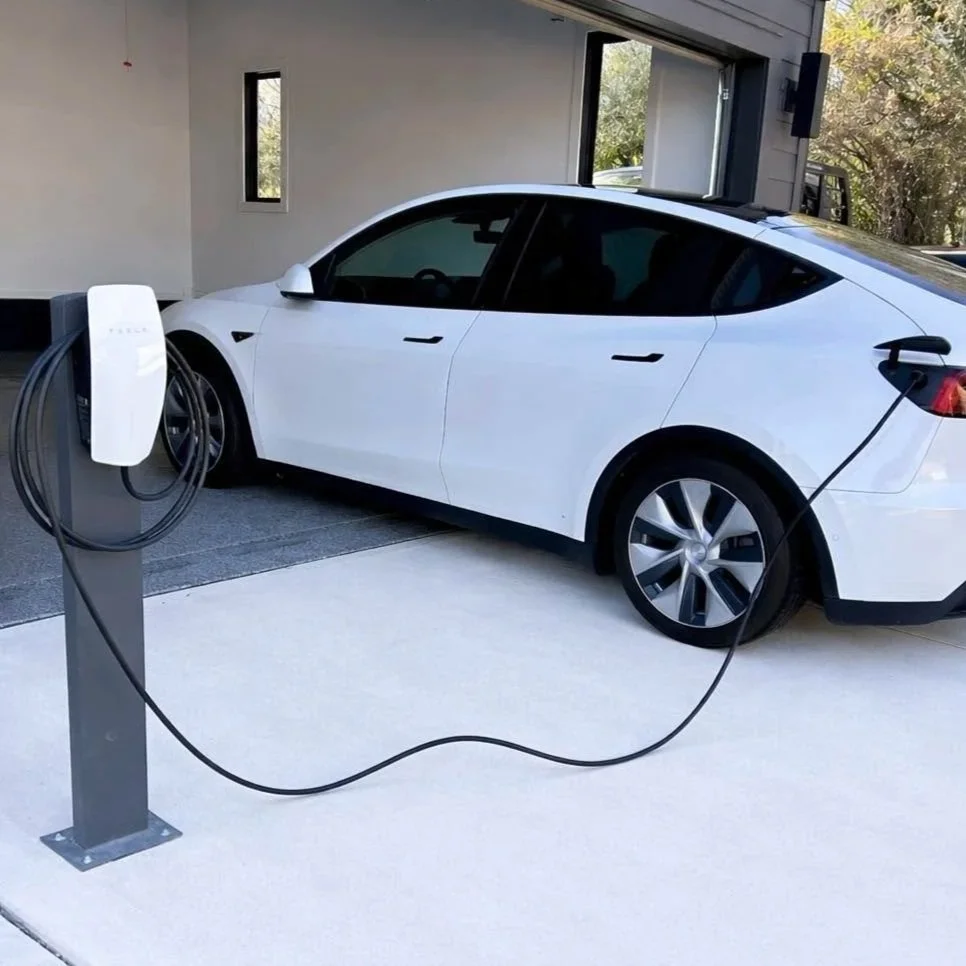
Licensed EV Charger Installation & Level 2 Solutions
CurrentMax Electric provides professional, code-compliant Level 2 EV charger installations for homeowners throughout the greater service area. Our licensed residential electricians design, wire, permit, and install custom indoor and outdoor charging systems tailored to your home’s electrical capacity and daily driving habits.
Service Capabilities & Equipment We Install
Whether you require a maximum-speed hardwired setup or a versatile plug-in solution, CurrentMax Electric installs premium EVSE hardware matched to your vehicle and electrical infrastructure:
Level 2 Hardwired Charging Stations: Tesla Universal Wall Connector, ChargePoint Home Flex, JuiceBox, Emporia, Wallbox Pulsar Plus, and Autel MaxiCharger.
Continuous-Duty Plug-In Receptacles: Industrial-grade NEMA 14-50 and NEMA 6-50 receptacles (Hubbell and Bryant commercial grade to eliminate terminal meltdown risks).
Smart Energy Management & Load Shedding: DCC (Demand Charge Controller) boxes, Span smart electric panels, and SimpleSwitch energy managers that enable EV charging on 100A or 150A services without a costly utility service upgrade.
Main Electrical Panel Integration: Breaker installation, subpanel additions, and busbar integration for major electrical brands including Square D (QO & Homeline), Eaton (Cutler-Hammer BR & CH), Siemens, and GE.
Outdoor & Detached Charging Systems: Underground trenching, direct-burial schedule 40/80 PVC conduit, custom mounting pedestals, and weather-rated NEMA 3R/4X enclosures for carports, driveways, and detached garages.




Local Permitting & NEC Code Compliance
100% Permitted & Inspected Work — Protecting Your Home's Warranty & Insurance
Electric vehicle supply equipment (EVSE) draws sustained electrical current for hours at a time, making strict compliance with national and municipal safety codes non-negotiable:
-
Dictates dedicated branch circuits, disconnect switch requirements for units rated over 60A, and correct ventilation/clearance metrics.
-
Because EV charging is classified as a continuous load (operating for 3 hours or longer), the circuit breaker and branch wiring must be sized to 125% of the charger’s rated output. A 48-amp hardwired charger requires a dedicated 60-amp circuit; a 40-amp charger requires a 50-amp circuit.
-
All 150V-to-ground or 250V receptacle-based EV charging outlets in garages, outdoors, and basements require GFCI circuit breaker protection. (Note: Hardwired units avoid the nuisance tripping issues often caused by stacking breaker GFCI with internal charger GFCI monitoring)
-
CurrentMax Electric handles the complete permitting process with your local building inspection department, scheduling mandatory rough-in and final electrical inspections to protect your home’s insurance coverage and property value.
| Variable | Lower Cost Scenario | Higher Cost Scenario |
|---|---|---|
| Distance to Panel | Charger mounted directly adjacent to or within 10 ft of the main panel. | Long wire runs (>50 ft), routing through finished ceilings, attics, or crawlspaces. |
| Pathway & Trenching | Surface-mounted EMT conduit inside an open, unfinished garage. | Core drilling masonry, trenching under driveways/walkways, or burying line to detached structures. |
| Available Service Capacity | 200A main service with multiple open breaker spaces and low baseline load. | 100A–125A service panel requiring a DCC energy management switch or a full 200A service upgrade. |
| Installation Type | Dedicated hardwired connection (standard 2-pole breaker, no external GFCI required). | 50A industrial receptacle install requiring dual-function GFCI protection and high-grade junction boxes. |
Transparent Cost Factors: What Shapes Your Estimate
Step-by-Step Installation Process
Site Assessment & Load Calculation
NEC Article 220 load calculation performed before any quote is finalized.
We evaluate your existing main service panel, available physical breaker slots, and perform an exact NEC Article 220 residential load calculation to verify your panel can safely accept continuous charging loads without tripping the main service disconnect.
Permit Acquisition & Utility Coordination
Handling all regulatory paperwork
CurrentMax Electric submits all technical wiring diagrams and load calculations to your local municipal building authority to secure the required electrical permit before running any wire.
Precision Circuit & Charger Installation
The correct power to power your EV
Our electricians run properly sized copper wiring (such as 6 AWG or 4 AWG THHN/Romex depending on continuous amperage), mount your charging station or industrial receptacle, configure internal dip switches for your vehicle's charge rate, and ground the system.
Commissioning, Testing & Municipal Inspection
Final sign-off and safety audit
We verify voltage drop, test grounding paths, connect the unit to your home Wi-Fi for app telemetry, and coordinate the final on-site inspection with your city or county electrical inspector.
Frequently Asked Questions
-
Yes, in many cases. While heavy electrical loads like central air conditioning and electric heat may max out a 100A panel, you do not always need a full panel replacement. CurrentMax Electric installs smart energy management devices (such as a DCC-9 or Span smart panel) that monitor your main service in real time, pausing vehicle charging only during peak household power use and resuming automatically when demand drops.
-
Hardwired installations are faster and more reliable. A hardwired charger can safely deliver up to 48 or 80 amps of continuous output (adding up to 44 miles of range per hour) and does not require an external GFCI breaker, eliminating false tripping. A NEMA 14-50 plug is capped at 40 amps of continuous charging, requires an expensive GFCI breaker by modern NEC code, and introduces wear-and-tear contact points.
-
Standard builder-grade outlets (often priced under $15 at big-box stores) are designed for clothes dryers or ranges that draw intermittent power. An EV draws a sustained, high-amperage continuous load for 4 to 8 hours straight. Under that heat and mechanical stress, cheap terminals loosen, degrade, and can melt or ignite. We exclusively install commercial, continuous-duty receptacles (like Hubbell or Bryant) with high-torque screw terminals.
-
Most standard garage installations take between 2 to 4 hours of on-site work. Extended runs requiring finished-drywall patching, exterior trenching, or energy manager subpanel installations typically take 4 to 6 hours.
Ready to Power Your Vehicle at Home?
Get a transparent, code-compliant quote tailored to your electrical panel.
Call CurrentMax Electric at (919)335-3241