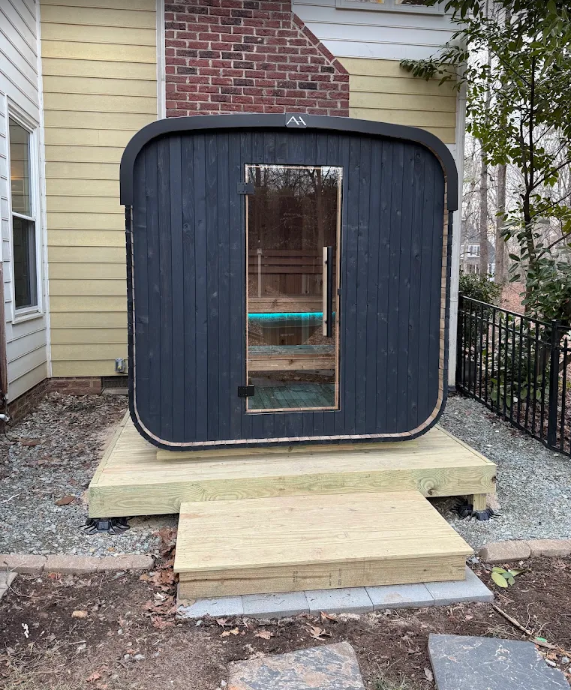
Dedicated 240V Circuit Installation for Spas, Saunas & Workshops
CurrentMax Electric installs dedicated 240V heavy-duty electrical circuits and code-compliant disconnects for residential hot tubs, outdoor saunas, and home workshop machinery across the greater service area. Our licensed, insured electricians ensure safe, high-amperage power delivery tailored directly to your home's breaker panel.
Service Capabilities & Premium Equipment
Powering high-draw residential equipment requires heavy-duty hardware rated for heat, outdoor elements, and continuous inductive motor loads. We install and configure:
Hot Tub & Spa Hookups: Dedicated 50A and 60A 240V circuits utilizing weather-rated outdoor subpanels with integrated Class A GFCI protection and metal disconnect enclosures.
Sauna Electrical Feeds: High-temperature-rated wiring (THHN/copper) and contactor controls for traditional rock heaters, infrared saunas, and steam generators.
Workshop & Garage Heavy Power:
Welder & Compressor Circuits: 30A to 50A dedicated feeds paired with industrial-grade NEMA 6-50 or NEMA 14-50 receptacles.
Stationary Woodworking Tools: Dedicated 240V (NEMA 6-15 / 6-20) drops and high-draw 20A 120V lines for table saws, dust collection systems, planers, and ceramic kilns.
Energy Management & Smart Panels: Seamless integration with Span Smart Panels, DCC (Dynamic Energy Management Controllers), and traditional heavy-load distribution panels.
Commercial-Grade Hardware: We exclusively use top-tier electrical equipment from trusted manufacturers including Square D (QO & Homeline), Eaton Cutler-Hammer, Siemens, and Leviton.
Local Permitting & NEC Code Compliance
100% Permitted & Inspected Work — Protecting Your Home's Warranty & Insurance
High-voltage installations demand strict adherence to National Electrical Code (NEC) standards and municipal safety inspections. Every CurrentMax Electric installation is engineered to satisfy:
-
Maintenance Disconnect Placement: A dedicated, readily accessible emergency disconnect switch must be installed within sight of the spa, positioned at least 5 feet away from the water's inside wall (to prevent accidental contact from inside the tub) and no more than 50 feet away.
GFCI Protection: Uncompromising Ground-Fault Circuit-Interrupter protection on all spa/hot tub equipment and accessory outlets within 20 feet.
Equipotential Bonding: Low-resistance copper bonding grids installed to eliminate stray voltage and touch potentials around outdoor water installations.
-
Sizing breakers and conductors to handle large continuous startup inrush currents without nuisance tripping or terminal overheating.
-
Formal calculations performed prior to permit submission to guarantee your main service drop can handle the new load without overloading the utility feed.
Transparent Cost Factors: What Shapes Your Estimate
Because every home’s electrical layout is unique, final pricing depends on several specific site conditions:
Distance & Wire Run Length: Heavy-gauge copper wire (such as #6 AWG or #4 AWG required for 50A/60A runs) represents a major material cost; longer distances from your main service panel to the equipment naturally scale the project price.
Routing Path (Attic, Crawlspace vs. Trenching): Unobstructed routing through an unfinished basement or attic is the most cost-effective. Exterior installations requiring conduit runs around the house or underground trenching across lawns, paver patios, or concrete driveways require additional labor and specialized conduit (Schedule 40/80 PVC).
Main Electrical Service Capacity: If your home operates on an older 100A or 125A panel and lacks physical breaker slots or load headroom, a panel upgrade or the addition of an energy-management load shedder (like a DCC unit) may be necessary.
Interior vs. Exterior Disconnects: Outdoor hot tub installations require weatherproof NEMA 3R GFCI disconnects, liquid-tight flexible metallic conduit (LFMC), and dedicated grounding rods/bonding compared to standard indoor workshop boxes.
Step-by-Step Installation Process
Site Assessment & Load Calculation
Load calculation performed before any quote is finalized.
We review your equipment manufacturer specifications, inspect your existing service panel, and perform a formal NEC load calculation to confirm your home can safely handle the new continuous draw.
Permitting & Utility Coordination
Handling all regulatory paperwork
CurrentMax Electric handles all municipal paperwork, pulling the required electrical permits with your local building department before touching a wire.
Clean, Code-Compliant Installation
Our licensed electricians run appropriately sized copper conductors, install commercial-grade receptacles or weather-rated disconnects, anchor conduit cleanly, and terminate all connections to factory torque specs.
Code Inspection & Live Load Testing
Final sign-off and safety audit
We verify proper voltage under load, trip-test all GFCI disconnect mechanisms, verify bonding continuity, and schedule the final municipal electrical inspector sign-off.
Frequently Asked Questions
-
It depends on your home’s existing major electrical appliances (such as electric heat pumps, water heaters, and EV chargers). During our initial assessment, we perform an NEC Article 220 load calculation. If your 200A panel is near capacity—or if you have a 100A panel—we can either install an energy management system (like a DCC device) that temporarily pauses the spa or equipment during peak home demand, or upgrade your panel to 200A/400A.
-
Under NEC Article 680, an emergency disconnect switch must be located outdoors, within sight of the hot tub, at least 5 feet from the water edge, and no further than 50 feet away. This allows emergency shut-off in the event of an electrical fault or drowning hazard, and provides service technicians with a lockable shut-off point during maintenance.
-
A NEMA 6-50 outlet is a 3-prong, 240V plug configuration featuring two hot wires and a ground wire—ideal for most MIG/TIG welders and heavy workshop equipment that do not require neutral-voltage internal electronics. A NEMA 14-50 is a 4-prong outlet featuring two hots, a neutral, and a ground wire (240V/120V), which is standard for modern RVs, electric ranges, EV chargers, and multi-voltage machines.
-
Yes. Adding high-voltage 240V circuits, outdoor subpanels, or running new dedicated lines requires an electrical permit in almost every municipality. Permitting protects your home's insurance coverage, guarantees the work meets current National Electrical Code safety standards, and ensures your home passes inspection when you sell.